Research
Bird Bone Identification Guide
A computer program designed to be used by archaeologists, ornithologists and forensic scientists. This program was created as a time saving tool to help identify bird bones to species. This program is a “guide” and is intended to be used with a comparative faunal collection. The program works on the simple concept of sorting out the long bones by their total length, combined with a visual aid using photographic images. Comparing the diversity of characteristics of the different bones in the images will narrow down the bone to a species or at least the possibility of two or three species. Having narrowed down the possibilities one can go to a comparative faunal collection for verification and final identification. Sex may also be determined for some species. This program also provides ranges of end widths to help narrow down the identification of species when only the ends of bones are present. Only the Falconiformes (Hawks, Eagles & Falcons) and Strigiformes (Owls) of British Columbia are represented at this point.
Research forms a key part of our mission at the Royal BC Museum. It is how we unlock the secrets to this magnificent land and the cultures that have flourished here. It helps us to be the best possible stewards of the human and natural histories of British Columbia. And it also guides us in sharing the story of this province, so rich in geography and culture, with the rest of the world.
The Royal BC Museum is unique among other public institutions. Our purview is staggeringly broad. Not only are we constantly looking forward, making new scientific and cultural discoveries that contribute to our understanding of today and tomorrow, we’re also deeply engaged in searching out answers about the past. We share our findings. We apply our knowledge and discoveries to this diverse and rich provincial collection we are charged with stewarding. And we interpret its stories for all who want to hear them.
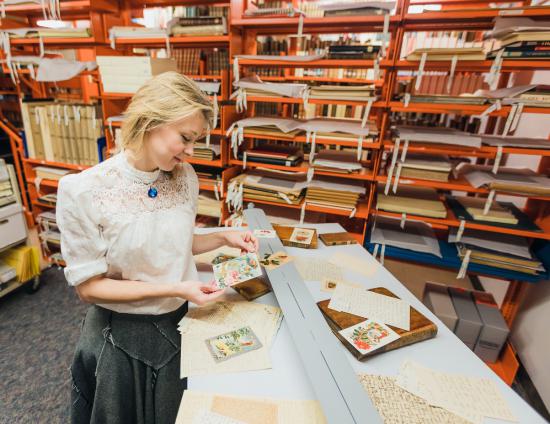
Part of our research program sees us directing our focus inwards. The work of stewarding millions of priceless objects is never finished. Technological advances allow us to constantly improve our methodologies. Research by our conservation experts adds new dimensions to our knowledge about the objects in our care, resulting in better and more efficient methods and practices for treatment and preservation. In developing the museum galleries and exhibitions, we conduct in-depth investigations into BC’s fascinating collections. Our curators create comprehensive information packages relating to each exhibition. Archivists scrutinize our holdings for data relating to the topic in question. Conservators analyze each object or specimen before it is placed on display. Each artifact and specimen is fully researched so we can share its most accurate – and riveting – story with our visiting public.
And we direct our focus outwards, too, in conducting other research. Whether we’re investigating what ancient pollen grains tell us about BC’s past climate shifts or how energy development has shaped human settlements through time, our research expands our understanding of this province – and the world beyond.
As our researchers explore the topics of the evolution of British Columbia’s natural environment and the growth of human societies and cultures within that environment, our collections provide the foundation blocks upon which they, as researchers, begin to address major issues facing our society, such as climate change, developments in energy, and changes in social and biological diversity. The work of all these researchers contributes tremendously to our understanding of the natural and cultural processes that have made BC into what it is today – and what it may yet become.
The plan provides a framework to guide research and balances initiatives with emerging issues and priorities. As stewards of the province’s human and natural histories, we must not only tend to the past and present, but prepare for what’s ahead.
We hope the plan makes it easier for members of the general public to see what we’re investigating and what we hope to find out.
The aim of research at the Royal BC Museum is to broaden our understanding of the human and natural histories of British Columbia so that we can better understand our social and environmental context. As stewards of the provincial collection, we are responsible for learning from our past, sharing our understanding of our world in the present, and looking toward the issues that will impact British Columbians in the future.
Guiding Tenets of Royal BC Museum Research
Whether the Royal BC Museum decides to undertake a particular research activity or program will be based the following guiding tenets:
- Research should explore issues that are significant to British Columbia.
- Our job is to deepen our knowledge and understanding of things that matter to British Columbians now and in the future. This includes research projects that allow our researchers to collaborate with other expert partners, projects that build on existing strengths in the collection or those that are intended for the public good.
- Research should be undertaken in consideration of how the collection will develop as a result.
- The research plan allows flexibility to accommodate short-term projects developed in response to urgent issues, changing needs or community concern.
- Sometimes we don’t know what’s going to come up within a given year. Our research plan is written with the understanding that smaller projects that pertain to the BC story will crop up and need our attention periodically. We recognize also that these projects inevitably enrich our knowledge base and enhance the development of our collections.
- Funding for research projects must be available from core RBCM resources, grants, or other external funding.
- Research project outcomes should be reported at regular intervals.
By updating our progress at least once a year, we will keep internal departments and the general public apprised of each project’s outcomes. Projects will be broken down into long-term stages, plus specific measures to be achieved in the short term (i.e., within one fiscal cycle).
It’s a constantly evolving story. It’s the story of this province and its history, but also of its people: their perspectives, their experiences, their communities. When we talk about a person, or a group of people, we’re connecting them to a specific place. And when we talk of a specific place, we’re connecting it to the people who call – or once called – that place home. The BC Story gives our research shape and purpose.
Theme 1: Describing how government functions, including First Nations government
Program 1: History of public service
Government plays a central role in British Columbia society and the documentation of government and the records it produces are critical to our understanding of British Columbia yesterday, today and tomorrow. By conducting research into the records arising out of the activities of government, and administrative histories of the bodies that create those records, we will document this history.
Program 2: The BC Government and other organizations
The BC Government interacts with a wide range of other governments and agencies. It is our intention to document the Province’s relationship to these organizations and examine how it has evolved since Confederation, be it as a Crown Corporation, a municipal government, the Canadian Government or a community or business association.
Theme 3: Examining the larger processes of environmental change and history, as well as how and why they change
Program 7: Energy
Energy is basic to nearly every activity. Understanding how energy use has changed over time and studying the sources of energy – be it animal power, steam power or electrical power – helps us see where we have been in the past and where we are going in the future.
Program 8: Resources and industry
British Columbia’s economy has for hundreds of years been dependent on our natural resources. By linking our resources to the growth of industry we can explain much of the changing human and natural landscape of BC.
Theme 4: Studying biodiversity
Program 9: Rare and endangered species
Research into the rare and endangered species of BC deepens our understanding of our rich biological heritage. Museum scientists contribute to this growing field by making and studying collections. Knowledge gained from this research can inform the management, protection, restoration and conservation of these special species.
Program 10: Non-native species
Developing our knowledge base in invasive or exotic species helps us to understand distribution patterns, areas of particular vulnerability and impacts on indigenous organisms. By continually building upon this foundation of knowledge we can provide useful information to conservation officers and those in the field of species management. We’re also helping to inform members of the public so that in turn, they can know more about what belongs in BC – and what doesn’t. Our work here allows us to understand and raise awareness of the potential impacts of climate change on human communities and natural ecosystems.
Program 11: Paleo-environment of BC
Our research into past environmental changes reveals ancient landscapes, how plant and animal distributions have changed and the reasons for them. The evolving environmental also influenced how and where people lived. Our study of the history of the landscape, climate and plants and animals informs our understanding of the present-day and the implications of climate change. Our insights help identify gaps in our natural and human history collections and develop strategies to fill them.
Program 12: Taxonomy and phylogenetics
Basically, museum biologists study systematic biology (systematics), the field that (a) provides scientific names for organisms, (b) describes them, (c) preserves collections of them, (d) provides classifications for the organisms, (e) produces keys for their identification, (f) assembles data on their distributions (biogeography), (g) investigates their evolutionary histories and relationships (phylogenetics), and (h) considers their environmental adaptations. Taxonomy, narrowly defined, deals with functions a and b, but we can include classification and identification and other aspects here.
Program 13: Diversity
Museum biologists frequently assemble taxonomic, distributional, life-history, ecological, behavioral and other biological information on species and groups of species. This information goes into field guides, handbooks, annotated lists, and so on. Such products are important in the basic documentation of the province’s biological diversity. They are useful to, and popular with, scientists and the general public alike.
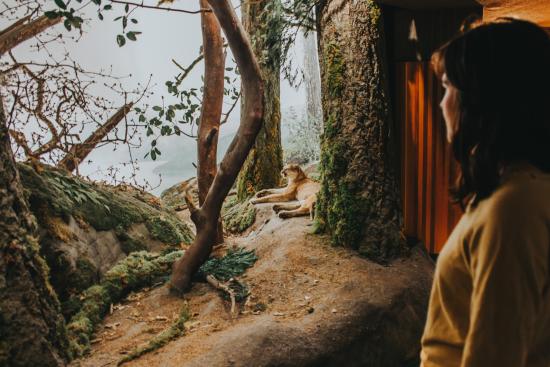
Exhibits and galleries at the Royal BC Museum are the result of careful study and documentation, but they are only able to show a small fraction of the research that goes on here. Researchers at the Museum, throughout British Columbia, and around the world use our collections to reveal new insights into the natural world and human cultures of BC.
Teachings From Long Ago Person Found: Highlights from the Kwädąy Dän Ts’ìnchį Project:
Key discoveries and points of context, the highlights begin by first exploring the circumstances of the initial find and setting the natural stage. The project’s social context is then considered. We learn about the original people of the discovery area, their current and past life-ways, and relationships with their neighbours. Responsibilities and ceremonies associated with this find of ancient human remains are outlined. The next part of the book explores the life of the “Long Ago Person Found”. Through studies of his remains, investigations seek the reasons that the Kwädąy Dän Ts’ìnchį individual may have traveled to the glacier and why he perished there.
Current Areas of Research:
Botany
Identification of bark species used in basketry
Non-native plants of the Kitimat area
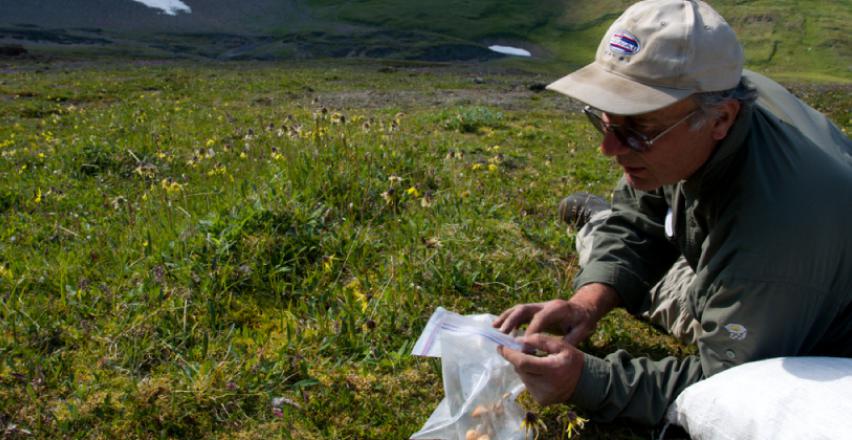
Botany of BC Mountains
Grass Flora of Northern British Columbia
Phytogeography of BC Mountains
Entomology
Biodiversity and Distribution of Megachile in BC
The establishment and assessment of a DNA barcoding library for BC’s geometrid moths
Documentation of terrestrial arthropod diversity in British Columbia
The Dragonflies of British Columbia
Exploring the world beneath your feet: Examination of the diversity, density and distribution of soil fauna in British Columbia
The Insect Families of British Columbia
Invertebrates at Risk in British Columbia
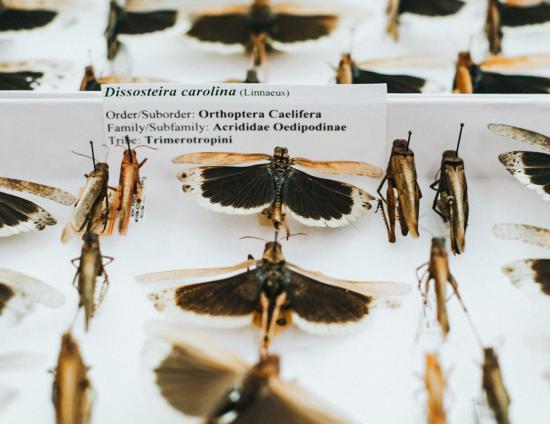
The Orthoptera of British Columbia: Diversity, systematics, ecology, and distribution
Systematics of Ceratopogonidae (Diptera) and related flies
Systematics of Lasiopogon (Diptera: Asilidae)
Systematic studies of the Syrphidae (Flower Flies) of British Columbia
Fish
Freshwater Fishes of British Columbia
Palaeoichthyology of the Devonian of Western North America
Monitoring Exotic Fish introductions in British Columbia
Survey of Intertidal Fishes in British Columbia
Herpetology
Monitoring Exotic Reptile and Amphibian introductions in British Columbia
Invertebrates
Assessing the genetic structure among populations of Olympia oysters (Ostrea lurida)
Characterizing non-native species in the Northeast Pacific
Documenting the invertebrate diversity of British Columbia
Mollusca: range extensions, prey-parasite relationships (Odostomia), non-indigenous species; and new species
Taxonomy, phylogenetics, and biogeography of Nerita (Gastropoda: Neritidae)
Paleontology
Interior paleoecology
Central and northern British Columbia paleoecology
Saanich Ethnobotany
Fossils of southwest British Columbia
Vancouver Island paleoecology

Theme 2: Understanding social economic and cultural diversity
Standards and practices toward digitization for preservation of sound and moving images
Program 3: History of communities in BC
British Columbia is not only a community, it is also made up of many communities. It is our aim to understand the way these communities have contributed to the British Columbia we know today. Why, for example, did some coastal villages and towns appear at one point in time, only to disappear at a later date? Who were the people who lived here and what shaped their lives? These are some of the questions we seek to answer.
Program 4: Biographical and historical documentation
Our work here consists of documenting British Columbia’s people and their histories through biographical and historical research that pertains directly to records. British Columbians will benefit from our contributions to the understanding of the people and events of our past, especially when undertaking their own historical research.
Program 5: The immigrant experience in BC
Myriad people have moved to and reside in British Columbia. This ethnic diversity has shaped who we are – and what we are. Their stories are our stories and it is these stories that we use to develop our collection, and create new galleries and exhibitions.
Program 6: Early period archaeology of BC
Human history in BC reaches back in time to over 10,000 years ago. Our ongoing investigations into the archaeological record add depth to our current understanding of the human story in British Columbia. Research in this area expands the quality of the information about our collections and provides a better context for this information. Having a solid knowledge base for our collections allows us to go forward with enhanced public programs that involve everything from public inquiries to major exhibits.